





























15. DT11 System Settings – Audio
1. USB Mode
USB Direct Mode: This is the standard compatibility mode, allowing users to switch between OTG and storage functions in real time for greater convenience.
USB Clean Mode: Enabling USB Purification Mode provides improved USB audio output quality. In this mode, USB 2.0 supports HOST output only. To connect the DT11 to a computer, please use the USB 3.0 port or switch to USB Direct Connection Mode.
2. SPDIF OUT
This setting controls the coaxial output signal and only needs to be adjusted when using coaxial output.
D2P Mode: PCM signals are output in their original PCM format. When playing DSD audio, the system converts DSD signals to PCM before output.
DoP Mode: PCM signals are output in their original format, while DSD signals are transmitted without conversion to PCM.
Note: DoP mode is recommended by default. If your external DAC does not support DoP, please select D2P mode instead.
3. Optical Output
The Optical Output function is disabled by default. Please enable this option before using optical output.
4. Adjustable System USB Output Volume
When this option is enabled, you can adjust the volume on the DT11 when using USB Audio output.
5. Adjustable SPDIF Output Volume
When this option is enabled, you can adjust the volume on the DT11 when using coaxial or optical output.
6. All to DSD
When All to DSD is enabled, all PCM audio signals will be converted to DSD format before output, providing a different sound signature and potentially improving perceived sound quality.
How It Works:
The main purpose of All to DSD is to convert digital audio signals from PCM format to DSD format, allowing the subsequent digital-to-analog conversion process to use DSD processing.
This can produce a different sound signature, potentially delivering clearer and more natural sound reproduction.
In addition, DSD64, the lowest standard DSD format, contains approximately four times the data rate of 44.1kHz/16-bit PCM audio. Therefore, All to DSD can also be regarded as a form of upsampling for audio signals such as 44.1kHz/16-bit PCM.
The All to DSD function also works with third-party music apps.
Notes:
Enabling All to DSD increases CPU power consumption, which may shorten the DT11's battery life and cause the device to generate more heat.
If you notice that the DT11's battery life is significantly shorter than the specifications listed on our official website, please check whether All to DSD is enabled.
We recommend disabling this function and testing the battery life again under the reference test conditions provided on our official website.
7. EQ Equalizer
The DT11 features a system-wide Parametric Equalizer (PEQ), which can be used together with the equalizer effects in FIIO Music and other third-party apps.
When the system PEQ is enabled, audio processing follows these rules:
-
Processing Priority: All to DSD > PEQ > MQA.
-
PEQ Compatibility: PEQ is effective only for coaxial output and non-exclusive USB Audio output during local playback. It works in Android Mode, Pure Music Mode, AirPlay Mode, and Roon Ready Mode, but does not apply to Bluetooth Receiving Mode or UAC Mode.
8. Bluetooth Audio Codec
During Bluetooth transmission, the DT11 automatically selects the highest-quality codec supported by the connected device.
You can use this setting to manually select the highest Bluetooth codec allowed.
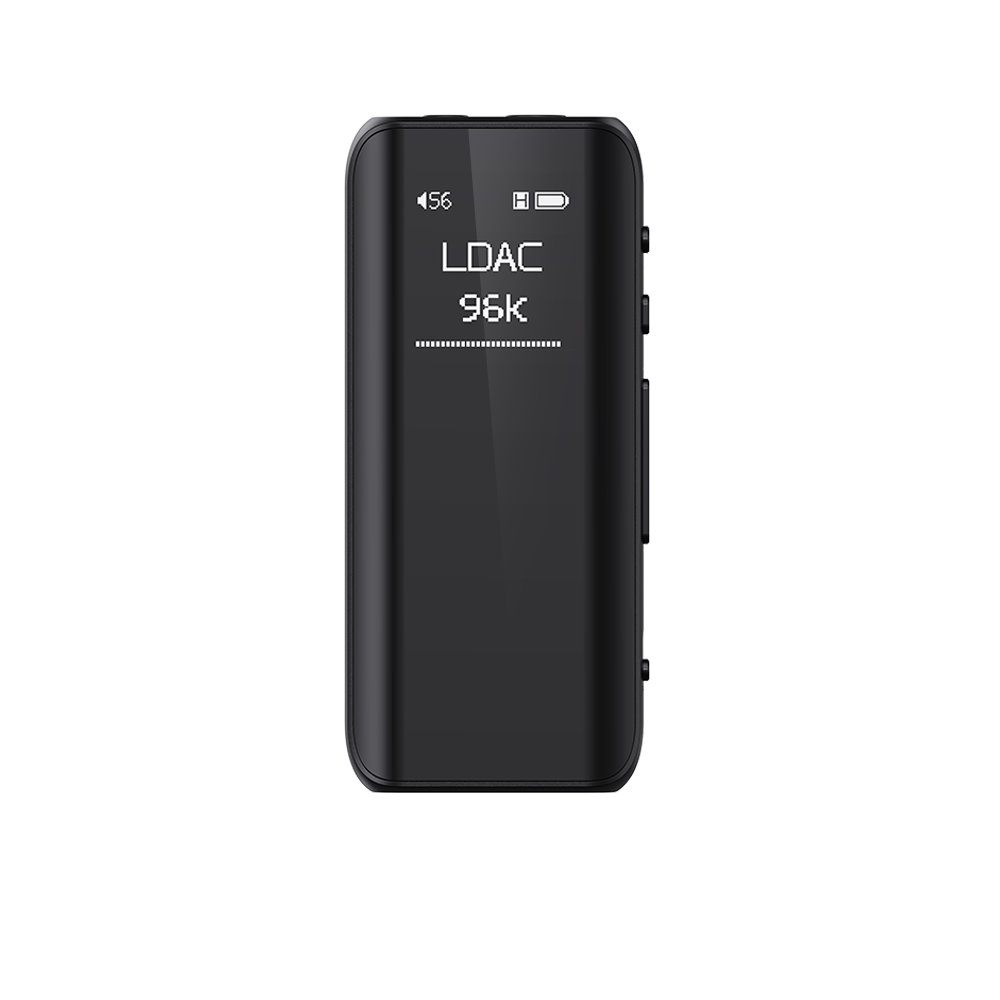
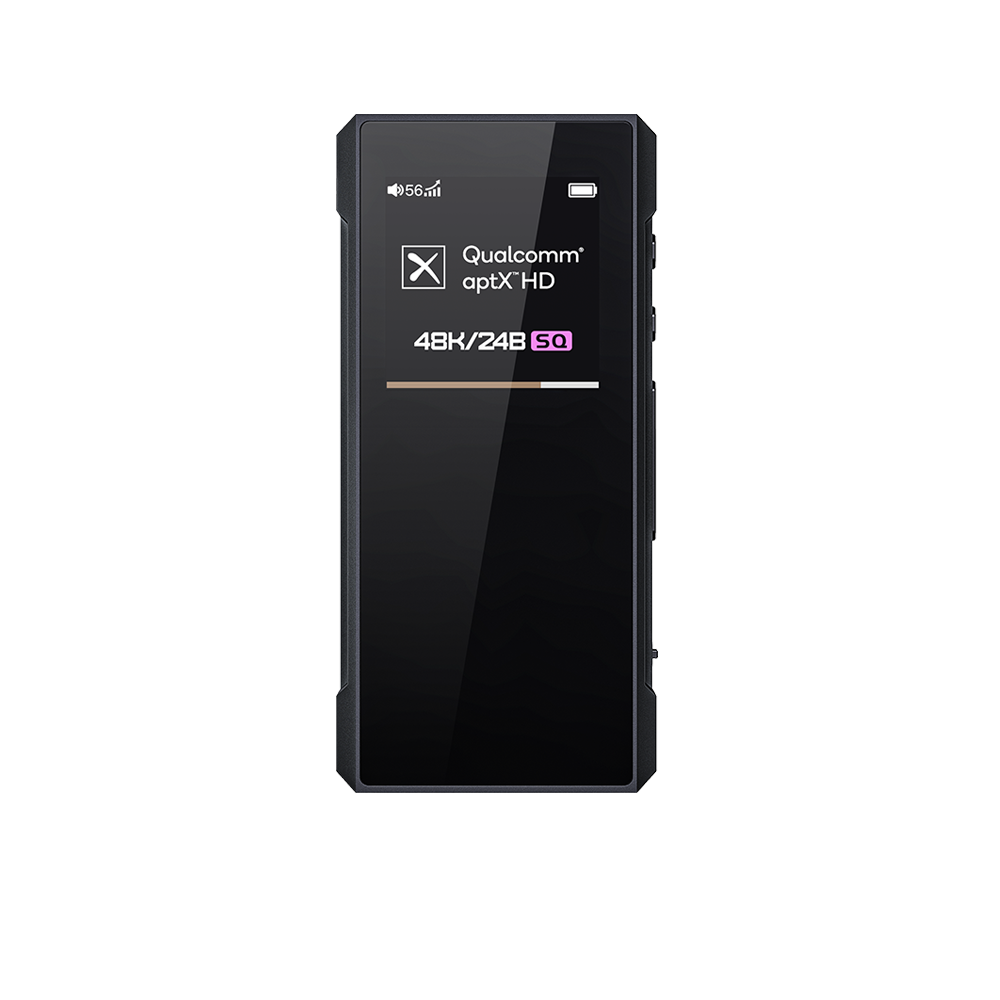
The DT11 supports the following Bluetooth codecs:
LDAC, LHDC, aptX HD, aptX, AAC, and SBC.
To change the Bluetooth codec, go to:
Settings > Audio > Wireless Playback Quality
Note: After changing the Bluetooth codec, you must disconnect and reconnect the Bluetooth device for the new setting to take effect.
9. Bluetooth Audio LDAC Codec (Playback Quality)
You can adjust the playback quality of the LDAC codec according to your preferences.
Four options are available:
-
Optimized for Audio Quality: 990kbps / 909kbps
-
Balanced Audio and Connection Quality: 660kbps / 606kbps
-
Optimized for Connection Stability: 330kbps / 303kbps
-
Best Effort (Adaptive Bitrate): Automatically adjusts the bitrate to provide the best possible audio quality based on connection conditions.
Note: This setting applies to Bluetooth transmission only.
10. Bluetooth Audio LHDC Codec (Playback Quality)
You can adjust the playback quality of the LHDC codec according to your preferences.
Five options are available:
-
Optimized for Audio Quality: 900kbps
-
Balanced Audio and Connection Quality: 500kbps/560kbps
-
Optimized for Connection Stability: 400kbps
-
Optimized for Low Latency: 256kbps
-
Best Effort (Adaptive Bitrate): Automatically adjusts the bitrate to provide the best possible audio quality based on connection conditions.
Note: This setting applies to Bluetooth transmission only.
11. Adjustable Line Output Volume
When Adjustable Line Output Volume is enabled, the volume can be adjusted when using Line Out (LO).
When this option is disabled, the Line Out operates at a fixed maximum output level.
12. EQ Equalizer
The DT11 features a system-wide Parametric Equalizer (PEQ), which can be used together with the equalizer effects in FiiO Music and other third-party apps.
When the system PEQ is enabled, audio processing follows these rules:
-
Sample Rate Conversion (SRC): Audio tracks with sample rates above 192kHz will undergo SRC processing before output.
-
Processing Priority: All to DSD > PEQ > MQA.
-
PEQ Compatibility: PEQ applies only to analog output during local playback. It works in Android Mode, Pure Music Mode, AirPlay Mode, and Roon Ready Mode, but does not apply to Bluetooth Receiving Mode or UAC Mode.
